
Children’s Eye Exams
We believe our children’s eye exams are essential to your child’s growth and development. Whether it’s sports or school, they’ll only excel if they can see their goal clearly.
A simple vision screening isn’t enough. One-third of vision screenings fail to detect vision disorders or eye problems in children. A comprehensive examination, including an ocular health assessment, is needed for a thorough evaluation of your child’s vision.
If your child feels anxious about their appointment, don’t worry; Dr. McCulley puts children at ease. She speaks directly to them without making them feel rushed or nervous. Most kids tell Dr. McCulley that their eye exam was fun!
Book AppointmentBook Appointment
Measure Those Milestones
By the time they’re in school, children should have well-developed visual skills. They should be able to see at a range of distances, from being able to look at the board in the distance and a book in front of them.
Their eye tracking ability should allow them to move their eyes along a page of words or follow a moving target like a basketball or baseball. Hand-eye coordination and visual perception should also be developed.
Sometimes, children who have vision problems are misdiagnosed with learning or behavioral problems like ADHD. Issues in school might indicate that your child needs a comprehensive eye exam. Often, a new pair of glasses can get them back on track.
Book AppointmentBook Appointment
What happens at a pediatric eye exam?
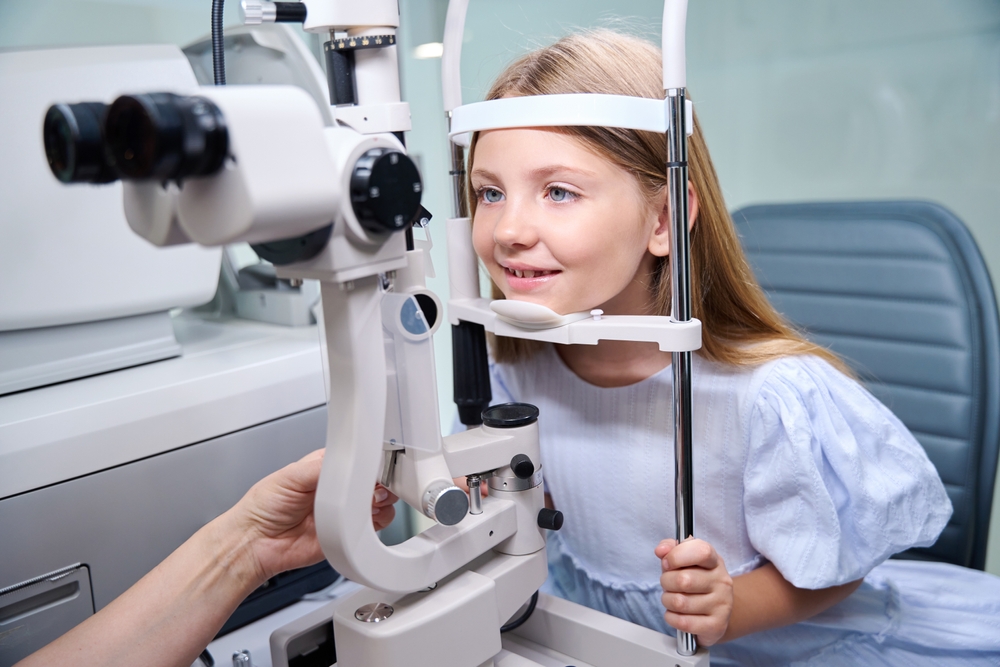
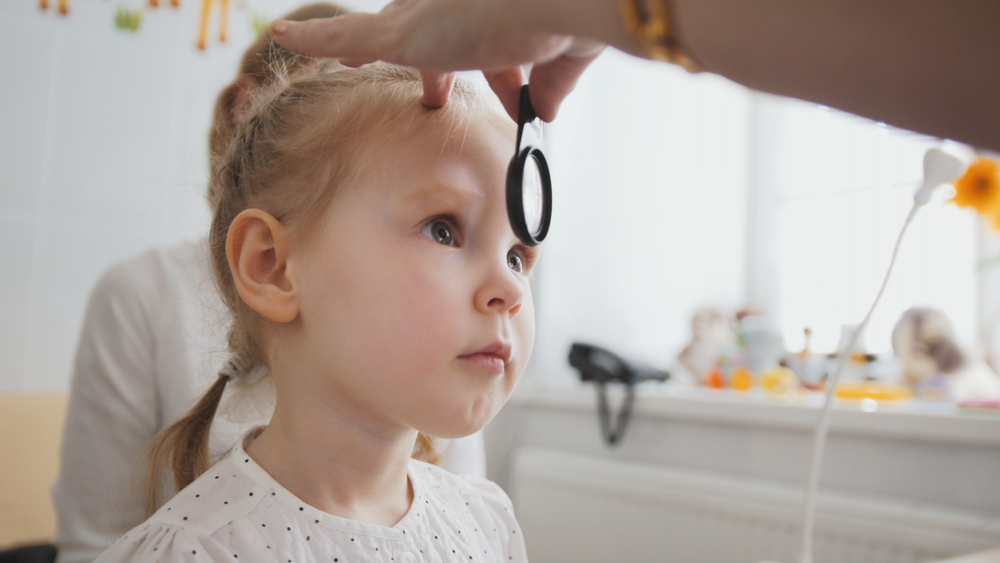
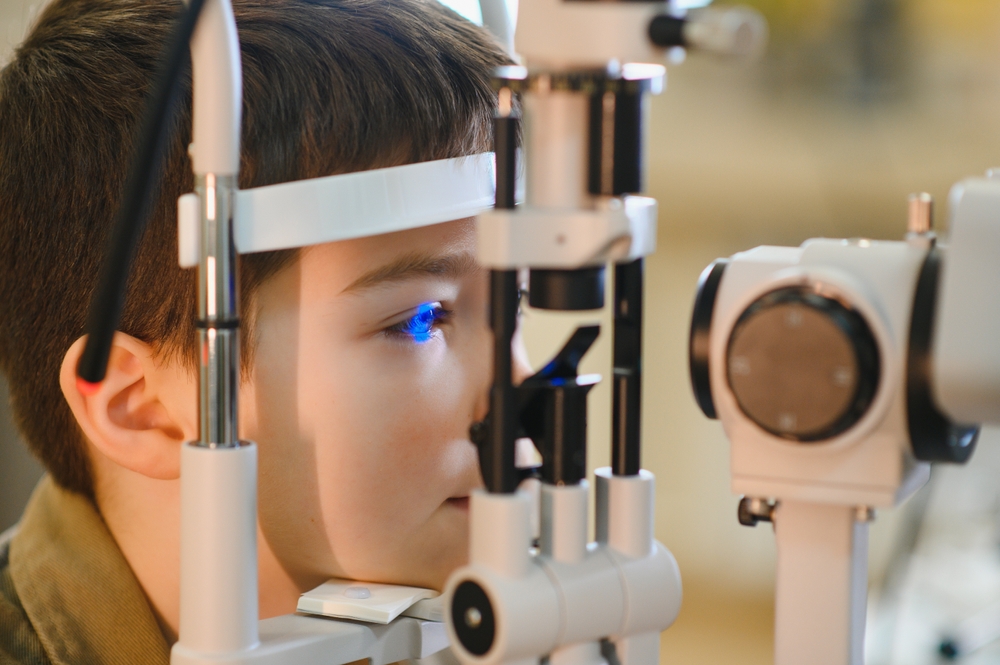
After making sure your child is at ease, Dr. McCulley will proceed with the eye exam. A series of tests will evaluate their depth perception, color vision, eye muscles, and whether or not they need glasses (visual acuity).
What conditions are you checking for?
Strabismus (Crossed Eyes)
A muscle condition called strabismus, commonly known as crossed eyes, can result in eyes that are not properly aligned.
Strabismus usually develops in infants and very young children. Don’t make the mistake of thinking that strabismus will go away on its own. It may get worse without treatment or lead to amblyopia (lazy eye).
Amblyopia (Lazy Eye)
If the brain and eyes aren’t communicating properly, amblyopia, commonly known as lazy eye, might occur. It usually develops before the age of 6. Symptoms are not always obvious, but if you notice your child squinting, tilting their head regularly, or shutting one eye, they need a comprehensive eye exam.
If amblyopia isn’t detected early, treatment can take longer and might be less effective.
Assisted By The Latest Technology
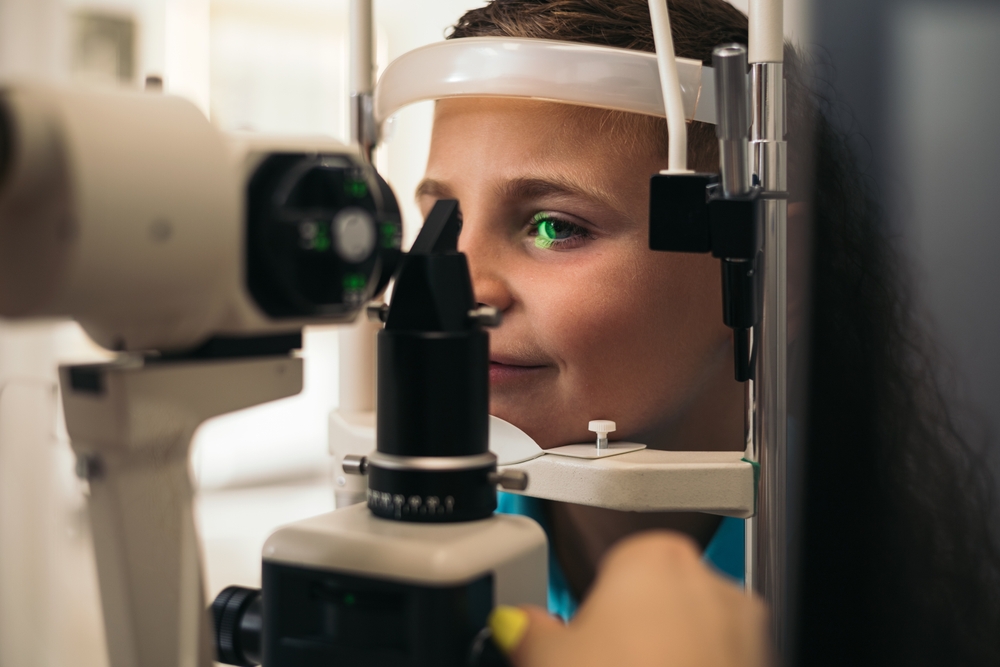
Pediatric eye exams include Optos imaging. This advanced retinal imaging takes an ultra-widefield photo of the retina, optic nerve, and delicate ocular blood vessels. A detailed view of these structures helps us to diagnose any potential vision-threatening conditions in their infancy.
NeuroLens: Does your child suffer from symptoms such as headaches or eyestrain? Have severe light sensitivity or dizziness? A simple screening test with the Neurolens instrument can assess whether new, customized lenses can help relieve the symptoms. Take the QUIZ to see if your child is a candidate for Neurolens relief.
Book AppointmentBook Appointment
Schedule Our Children’s Eye Exams Today
Our children’s eye exams are the foundation for healthy vision at every age and stage. Whether they need glasses or not, we’re here to help your child’s eyes reach their full potential. From infants to teens, Dr. McCulley looks forward to caring for your entire family. Book an appointment for your child today.
Book AppointmentBook Appointment